Luxury Boutique is a lifestyle magazine with solid organic traffic. The problem was simple: users read the content but left no trace. There was no mechanism to turn traffic into a relationship.
Starting point:
├ open access to content
├ no lead capture
├ no retention beyond a single article
├ untapped potential for partnerships and monetization
Decision: implement a registration mechanism that does not disrupt content consumption.
Design assumption
The goal was not to “stop” the user, but to introduce a light entry point into a relationship.
Minimal scope:
├ one field (email)
├ no password
├ no redirects
├ return to the article in the same context
How the mechanism works
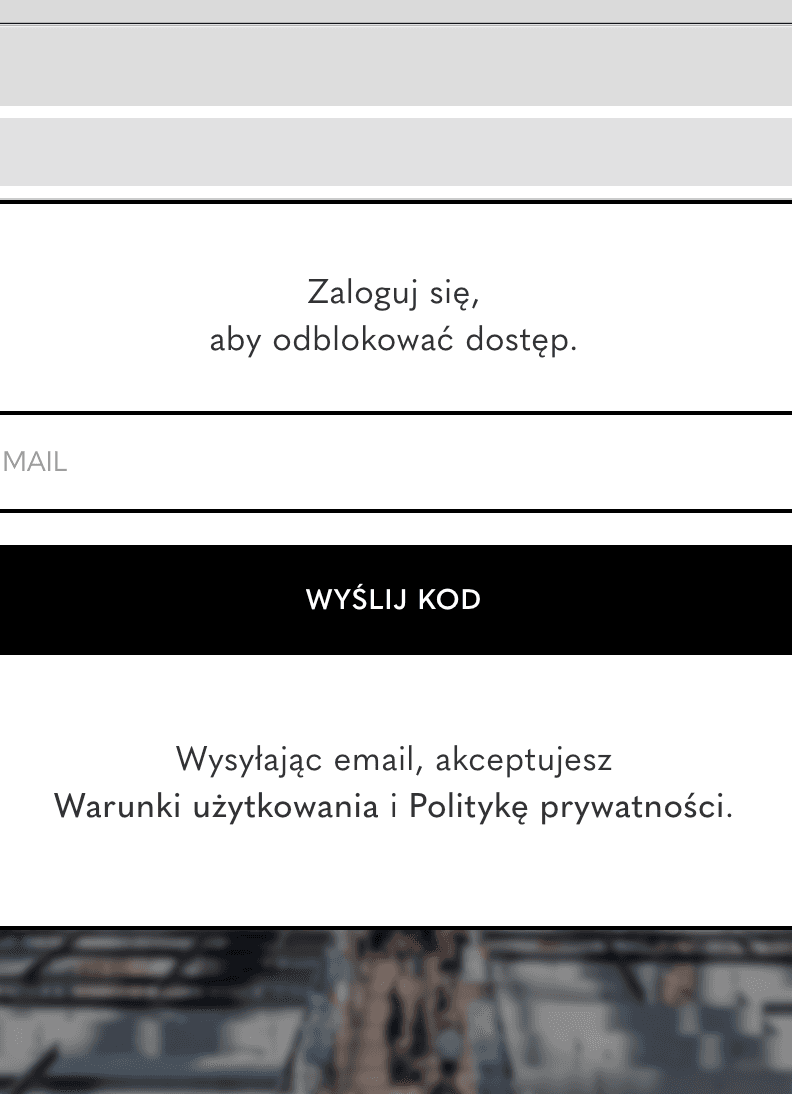
The user enters an article and sees partially restricted content along with a simple form.
- Enters email
- Receives a one-time code
- Enters the code and returns to the article
- The system saves the contact and creates an account in the background
On subsequent visits, the user remains logged in. No additional steps, no separate registration process.
Why OTP authentication
From a UX perspective, two things were key:
├ reducing the number of decisions on the user side
├ maintaining reading continuity
Removing the password simplifies entry and eliminates the most common drop-off points. At the same time, email verification improves data quality.
Design outcome
A system was created that:
├ converts anonymous traffic into a contact base
├ does not require changes in user behavior
├ operates within the same context (article as the entry point)
From a product perspective, this is a shift from a “content consumption” model to a “relationship layer.”
What this enables next
├ building an owned distribution channel (newsletter, campaigns)
├ segmenting users based on content they read
├ introducing premium or sponsored content
├ data-driven partnerships, not just reach-based
Conclusion
The biggest change was not the OTP mechanism itself, but the design decision: treating the article as the entry point to a relationship, not the end of the user journey.
This shifts the focus from traffic acquisition to its utilization.