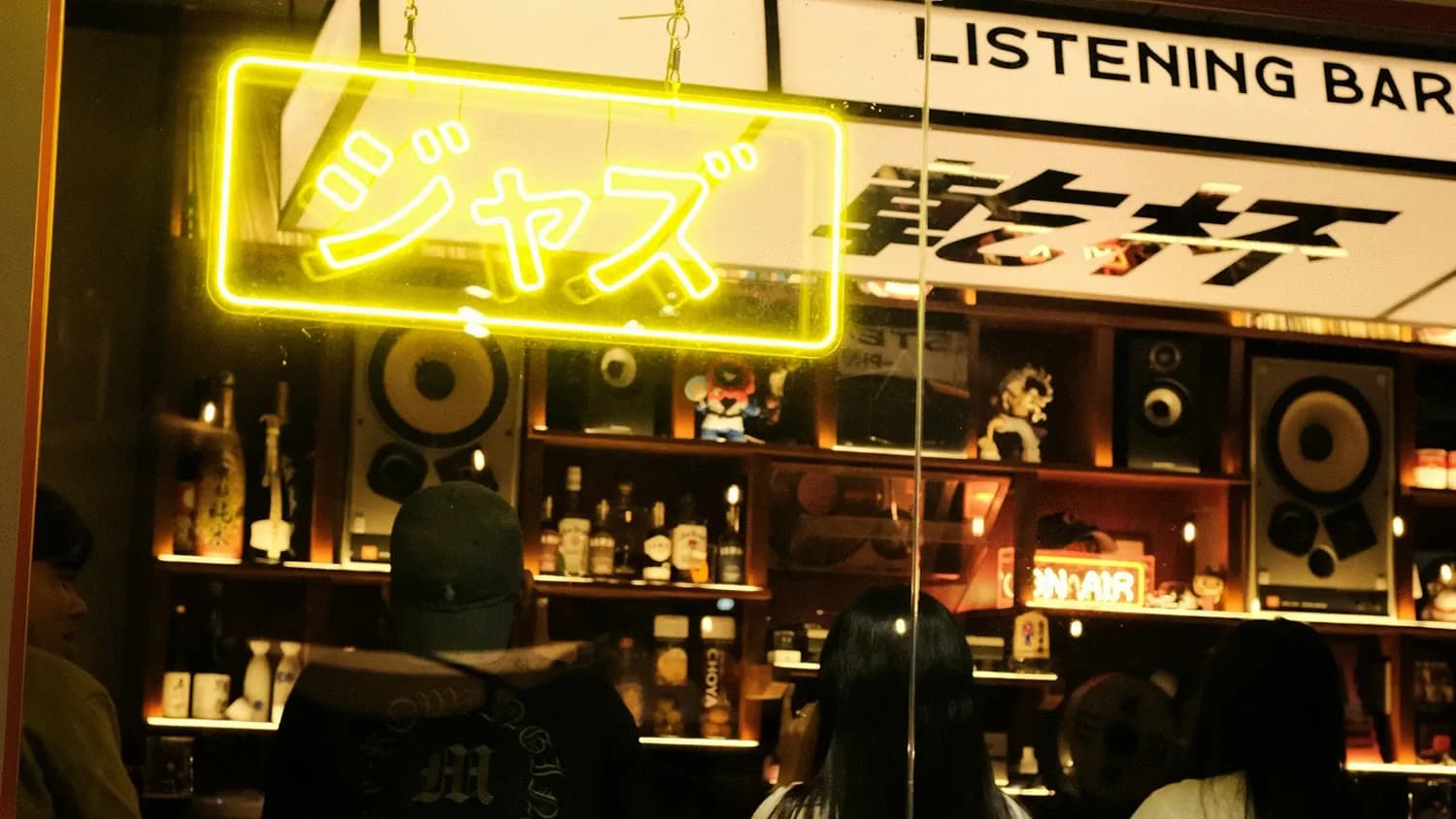
In 1920, American Prohibition shut down legal bars, but the desire for entertainment persisted. Speakeasies—illegal venues—filled the void, providing a new stage for jazz, which had originated in the Black neighbourhoods of New Orleans and Chicago. In places where secret passwords opened back doors, jazz became an elite symbol of rebellion.
Simultaneously, jazz was reaching Japan through the ports of Yokohama and Kobe. In a country fascinated by modernity, it found fertile ground, resonating as the soundtrack of a new era. The first jazz kissa—a café where music, rather than background noise, was the main focus—opened in 1929 near the University of Tokyo.
However, as early as 1943, Japan's wartime authorities published a list of a thousand American and British songs, banning their playing, possession, and public performance. Many of these were jazz pieces—so-called "enemy music." Record owners were expected to surrender them voluntarily, but many resisted, hiding vinyl records in basements and behind false walls, listening to them in hushed secrecy.
Jazz Kissa: a Bar like a Temple
After 1945, jazz returned triumphantly with the American military, marking the true beginning of the jazz kissa as an institution. In impoverished, postwar Japan, an imported record cost a third of a university graduate's salary, and visits from American musicians were rare. Kissa owners became purveyors of experience: they invested in audio equipment, built record collections, and created spaces for collective listening. Musicologist David Novak likened their role to that of Japanese juku—private schools where one was expected to sit in silence and study with absolute focus.
The layout of a kissa is typically highly functional: from the entrance, the eye is drawn towards the back of the room, where the sound system occupies a place of honour. This usually consists of two massive, often self-built, speakers and a valve amplifier. Tables are not arranged facing each other but in rows, orienting guests towards the sound sources. Philip Arneill, who documented these venues for two decades, compared this arrangement to a Shinto shrine: instead of fox statues on either side stand monolithic speakers, and in place of a deity hangs a photograph of a beloved musician, often signed.
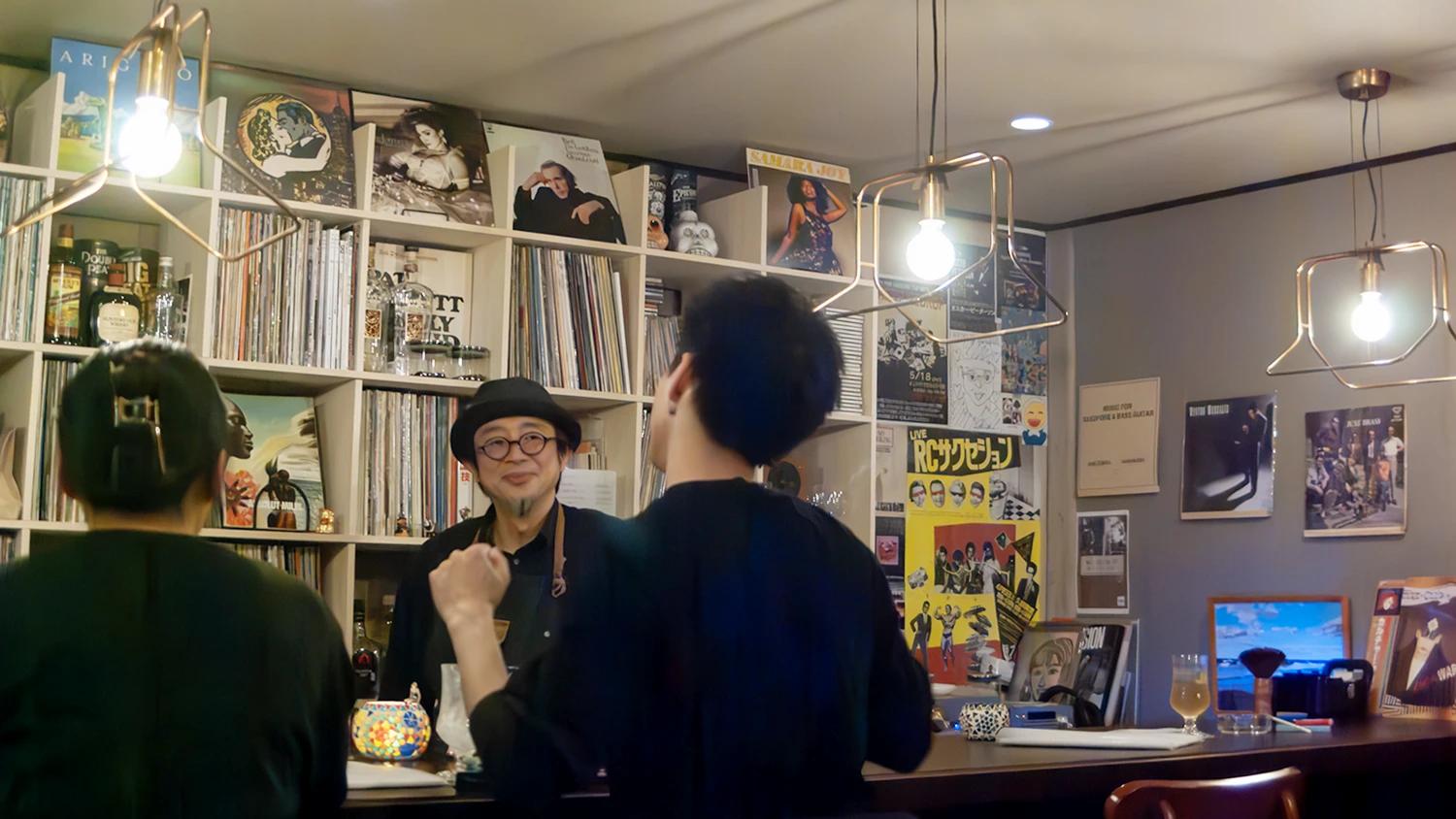
The owner of the venue is known as the masuta—master. He authoritatively decides what will be played, without consulting the guests. He observes their faces and reads the atmosphere, practicing kūki o yomu—"reading the air." He is more than a DJ; he is a conductor without a baton. His authority is non-negotiable—he stands at the threshold of his musical sanctuary. Eckhart Derschmidt notes that the kissa functions like an academic institution, where ritualised, attentive listening becomes inseparable from the music itself.
A Counterculture that Outlasted Rebellion
For decades, jazz kissas were bastions of counterculture in Japan, often located in the seedier parts of entertainment districts and associated with nonconformism. In the 1960s, when jazz became intertwined with student movements and civil rights struggles, these spaces took on a political character. Haruki Murakami, who himself ran such a café, recalled that although the spirit of rebellion quickly faded, the music endured—often remaining the only trace of former ideals.
Why the West Cannot Replicate It
Western attempts to transplant this model usually fall short. In New York, London, or Los Angeles, bars with vinyl records, designer speakers, and moody lighting continue to appear. Yet they lack a key element: the willingness of guests to relinquish control. In Japan, the authority of the masuta is self-evident; by entering a kissa, you accept that he determines the selection and duration of the music.
In Blue Nippon, E. Taylor Atkins wrote that the jazz kissa is not a place for socialising but a space where one is socialised, evangelised, and initiated into a discipline of listening. This idea cannot be translated into the language of Western business. Bars there adopt the aesthetic but reject the rigour, and without a collective focus, design becomes mere decoration.
A 2022 study published in Brain Sciences shows that shared music listening leads to a synchronisation of brain waves, building a strong sense of social bonding—a phenomenon termed "musical synchrony." Japanese kissas have unknowingly been practicing this since the 1950s. It is not about a rare record or an expensive speaker, but about an experience that is disappearing in the modern world: collective concentration, free from self-consciousness. In Japan, this is not a nostalgic trend but an institution with a ninety-year history, rooted in a tradition of rebellion and hidden records. It is a unique experience that cannot be replicated elsewhere—and precisely for that reason, it is worth travelling to Japan.
Sources and attributions:
- E. Taylor Atkins, Blue Nippon: Authenticating Jazz in Japan (Duke University Press, 2001);
- Philip Arneill, Tokyo Jazz Joints: Japanese jazz kissa as heterotopia, Jazz-hitz nr 4 (2021);
- E. Derschmidt, The Disappearance of the Jazzu Kissa (1998) w: The Culture of Japan as Seen through Its Leisure;
- E. Taylor Atkins, The War on Jazz, or Jazz Goes to War (Positions, 1998);
- David Novak, Japanoise: Music at the Edge of Circulation (Duke University Press, 2013);
- Wikipedia, Jazz Age; Wikipedia, Japanese jazz;
- Mob Museum — Prohibition: An Interactive History; Brain Sciences, musical synchrony research (2022)